

In this Article
If you’re a New Jersey small business owner doing your own books between customer calls, or paying someone who keeps “getting back to you” about that messy 2025 reconciliation, you already know what bad bookkeeping costs. Late nights. Surprise tax bills. That slow dread of opening your QuickBooks file.
Finding the right bookkeeper isn’t just an admin task. It’s the difference between running your business and being run by it. This guide covers what to look for, what to ask, what it should cost, and the red flags that send NJ owners back to square one a year later.
Why Choosing the Right Bookkeeper Matters
Bookkeeping for NJ businesses has a few wrinkles that make careful hiring more important than in most states.
New Jersey has its own Corporation Business Tax (CBT) for incorporated entities, a 6.625% state sales tax with origin-based rules for in-state sellers, and quarterly estimated tax payments with real penalties for underpayment by the NJ Division of Taxation. Miss a quarterly deadline or misclassify a sales-taxable transaction, and you’re looking at penalties plus interest. Not catastrophic on their own, but they compound fast year over year.
A bookkeeper for a New Jersey small business isn’t just keeping the ledger tidy. They’re the early warning system for NJ-specific filings, the person who catches a misclassified payment before it lands on your CPA’s desk in March, and the reason your accountant doesn’t charge you eight extra hours of cleanup every year-end.
Pro Tip: NJ quarterly estimated tax payments are due April 15, June 15, September 15, and January 15. A good NJ bookkeeper builds your monthly close calendar around these dates so you’re never scrambling.
Get this hire wrong, and you’ll spend more time correcting their work than you would have just doing it yourself.
Bookkeeper vs. Accountant: What NJ Business Owners Actually Need
Most owners lump these three roles together. They’re related, but they’re not the same thing.
A bookkeeper handles the daily work: recording transactions, reconciling bank and credit card accounts, managing accounts payable and receivable, running payroll, and producing monthly profit and loss statements. This is the operational layer.
An accountant takes those clean books and does higher-level work: financial analysis, tax return preparation, and advice on entity structure. Many NJ accountants won’t touch your books if they’re a mess; they’ll send you back to a bookkeeper first.
For most NJ businesses under $5M in revenue, the right starting point is a solid bookkeeper paired with a CPA who handles taxes and strategy once or twice a year. You don’t need a CPA doing $40-an-hour data entry work. Additionally, small businesses in NJ that need serious tax help but don’t require audited financials, an Enrolled Agent is often a cost-effective alternative.
Local NJ Bookkeeper vs. Virtual Bookkeeper: Which Fits Your Business?
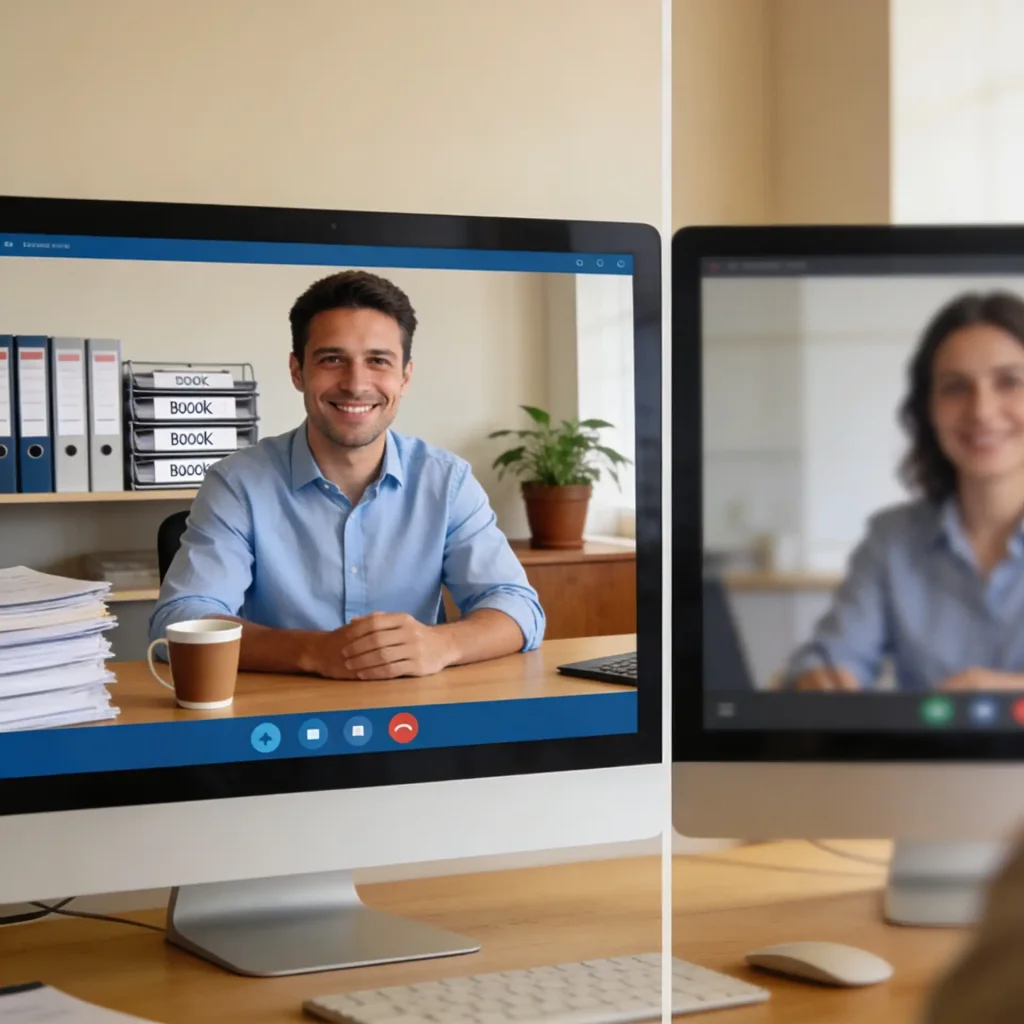
This is the second most common question we hear, right after pricing.
A local NJ bookkeeper sits in your county or region, may meet with you in person, and tends to know NJ tax requirements first-hand. They’re a strong fit for cash-heavy businesses like restaurants, retail, and contractors, where periodic in-person review of receipts and source documents actually matters.
A virtual bookkeeper works remotely through QuickBooks Online or Xero and communicates by email, Slack, or scheduled calls. They tend to be faster, cheaper, and easier to scale. For service businesses where everything is already digital, they’re often the better fit.
Both models can do excellent work. The real question isn’t where their desk is. It’s whether they understand New Jersey’s filing requirements. A virtual bookkeeper out of Hoboken who specializes in NJ LLCs will serve you better than a local hire who mostly works with Pennsylvania clients.
7 Qualifications That Separate Good Bookkeepers from Risky Ones
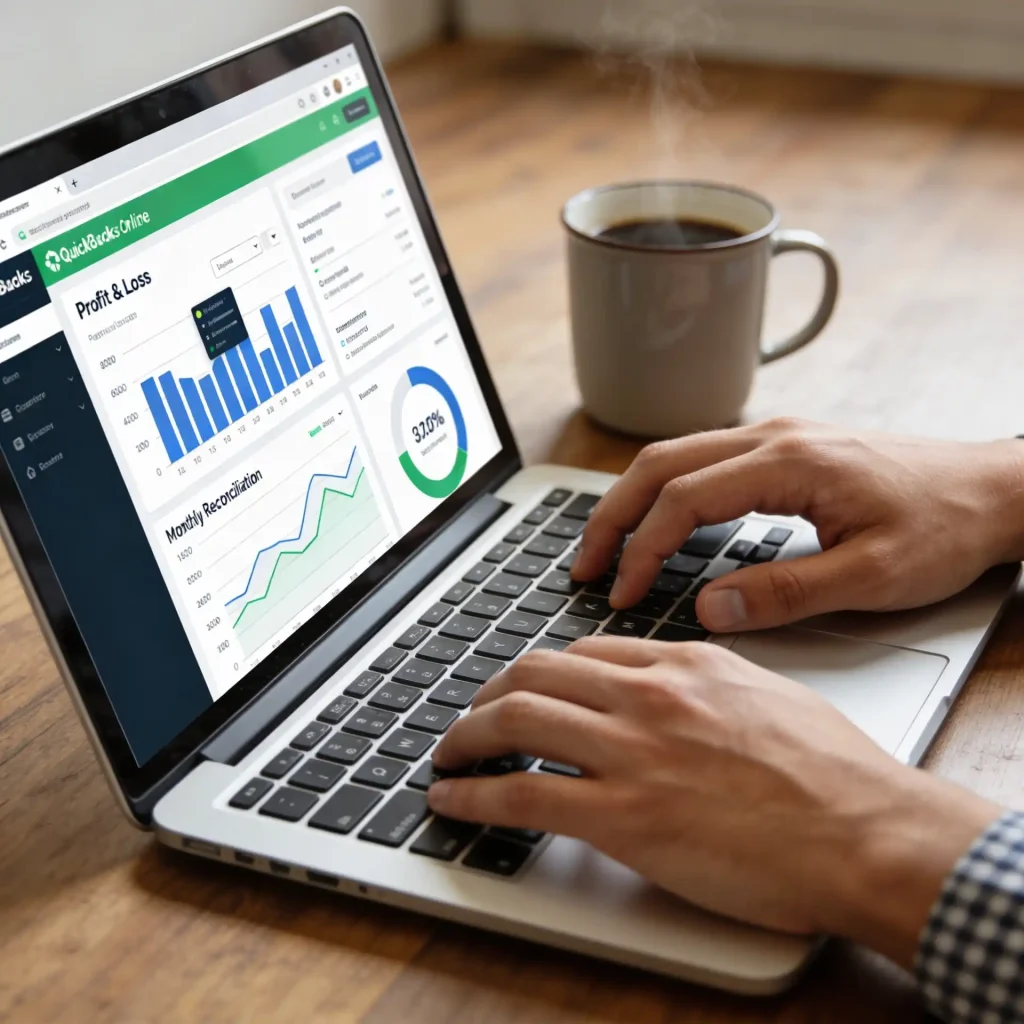
Use this as a filter. If a candidate doesn’t meet at least five of these, keep looking.
- Active NJ small business experience. They should be working with NJ-based clients right now, not “have worked with some over the years.”
- QuickBooks ProAdvisor or Xero certification. Software certification isn’t everything, but its absence is a red flag.
- A clear monthly close process. Ask how long their typical close takes after the month-end. Anything over 15 business days is slow.
- References you can actually call. Two or three current NJ clients in industries similar to yours.
- Defined the scope of work in writing. A real engagement letter spelling out what’s included and what isn’t.
- Clear communication cadence. Weekly check-ins? Monthly? You should never wonder whether work is happening.
- Data security practices. Two-factor authentication on financial software, encrypted document sharing, and no emailing tax documents as plain attachments.
NJ Business Owner Alert: Bookkeeping is unregulated in New Jersey. Anyone can hang out a shingle. That makes references and verifiable credentials non-negotiable. We’ve seen NJ owners hand a full year of records to a “bookkeeper” who turned out to be a part-timer with no certifications and no understanding of NJ sales tax.
10 Questions to Ask Before Hiring a Bookkeeper in NJ
Send these by email or run through them on a discovery call. The answers tell you more than a polished website ever will.
- How many NJ small business clients are you currently working with?
- What software do you use, and is it included in your fee?
- How do you handle NJ sales tax filings and quarterly estimated payments?
- Will you work directly with my CPA at year-end?
- What’s your turnaround time for monthly reports?
- How do you handle catch-up bookkeeping if I’m behind?
- What happens if you’re sick or on vacation? Who covers my account?
- Do you carry professional liability insurance?
- How do you secure financial data and login credentials?
- Can you show me a sample monthly reporting package?
If a candidate gets defensive about questions 1, 4, or 8, that’s your answer.
How to Make the Switch (Without Losing Sleep)
If you already have a bookkeeper, but you’re reading this, you probably already know it’s time. Here’s a clean four-step transition that won’t leave you exposed.
- Hire the new bookkeeper before firing the old one. Overlap is worth the cost. Two weeks is usually enough.
- Document login credentials and access. Make sure you, the owner, hold the master credentials to QuickBooks, your bank, payroll, and any state portals. Bookkeepers should have user-level access, not owner access.
- Run a clean handoff month. Pick a calendar month-end. The old bookkeeper finishes that close. The new one starts the following month with reconciled opening balances.
- Close out professionally. Pay any final invoices, get written confirmation that the work is complete, and revoke the old bookkeeper’s access on day one of the new month.
Not glamorous. But businesses that follow this process almost never have year-end problems.
Conclusion
Finding the right bookkeeper for your New Jersey small business comes down to three things: verifiable NJ experience, a clear process, and honest pricing. Skip the cheapest option. Skip anyone who stumbles on the ten questions above. And budget realistically for what your business actually needs. The right NJ bookkeeper pays for themselves, in hours you get back, in penalties you don’t pay, and in tax-ready books your CPA doesn’t have to fix. At The Chamberlain Accounting Firm, we specialize in full-service bookkeeping, tax preparation, and strategic planning for self-employed individuals, small businesses, and law firms. Our services include monthly bookkeeping, individual (Form 1040) and business returns (Forms 1065, 1120, 1120S), and year-round tax advisory. We serve clients in Bergen County, New Jersey, and across the U.S. Call us at (201) 371-3344 or reach out to schedule a consultation.
Frequently Asked Questions
Yes, and most accountants will tell you the same thing. An accountant handles taxes, strategy, and year-end filings; a bookkeeper keeps your records clean and current throughout the year. If your books are a mess when tax season arrives, your accountant will either charge you to fix them or hand them back to you. A bookkeeper makes sure that never happens.
It depends on your business type. Service businesses where transactions are already digital tend to work well with a virtual setup. Cash-heavy businesses like restaurants or contractors often benefit from occasional in-person review. Either way, what matters most is that your bookkeeper knows New Jersey's filing requirements, not where their office is.
A few reliable signs: your monthly reports arrive late or not at all, your accountant flags errors at year-end, you can't get a straight answer about NJ sales tax or quarterly payments, or you simply don't know what's happening with your books at any given moment. If you're reading this article because something feels off, it probably is.
Disclaimer: This article is provided for general informational purposes only and does not constitute accounting, tax, or financial advice. The information contained herein is not intended to be relied upon for specific tax, accounting, or financial decisions, and may not reflect current tax law or guidance. No opinion expressed herein may be used for the purpose of avoiding penalties under federal, state, or local tax laws. Readers should consult with a qualified accounting or tax professional regarding their specific circumstances. This communication does not create an accountant-client or advisory relationship.