

In this Article
If you owe taxes and can’t pay in full, a payment plan can stop most collection steps like levies or wage garnishment while you make agreed-upon payments. To get started, check eligibility and apply through the IRS Online Payment Agreement tool or by submitting Form 9465.
What Is an IRS Payment Plan?
An IRS payment plan is an agreement that lets you pay a federal tax balance over time instead of all at once. In other words, an installment agreement usually breaks your total tax, penalties, and interest into regular monthly payments.
- What it does: stops most IRS collection actions while you make the agreed-upon monthly payments.
- What it doesn’t stop: interest continues to accrue, and failure-to-pay penalties usually still apply.
- Who it helps: taxpayers who owe a tax balance but can afford regular monthly payments.
Types of IRS Payment Plans
The IRS offers several kinds of installment agreements (payment plans) to fit different balances and financial situations. Below are the common options, with who usually qualifies, typical timeframes, fees, and a short example to help you decide which plan may fit.
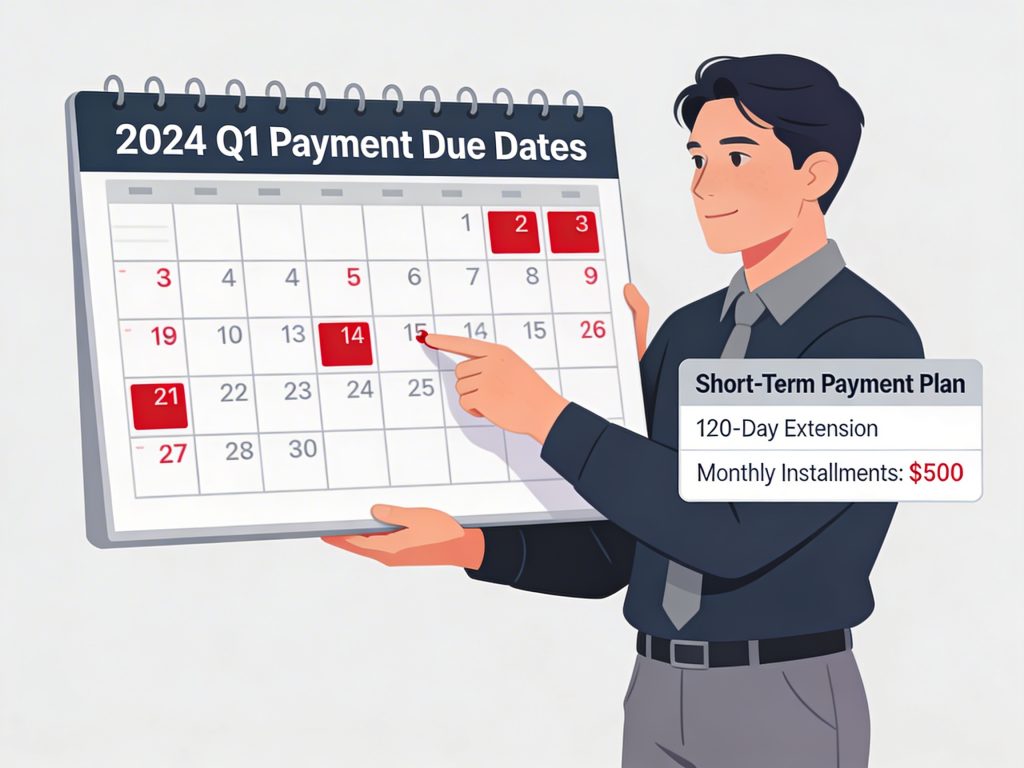
1. Short-Term Payment Plan
- Who qualifies: Taxpayers who owe a relatively small balance (often up to $100,000, including penalties and interest, confirm current IRS limits).
- Timeframe: Up to 180 days. In many cases, this is a short-term arrangement to clear the balance quickly.
- Setup fee: Often none for short-term plans.
- Best for: People who can pay the full balance within a few months.
2. Long-Term Payment Plan (Installment Agreement)
- Who qualifies: Taxpayers who need more time, commonly used when the total owed is up to about $50,000 (check current IRS thresholds and rules).
- Timeframe: Monthly payments over several years; many agreements run up to 72 months, depending on the balance and ability to pay.
- Setup fee: A fee may apply; however, the fee is typically lower if you set up the plan online and choose direct debit.
- Best for: Taxpayers who need predictable monthly payments to pay off larger balances over time.
3. Partial Payment Installment Agreement
- Who qualifies: Taxpayers who can’t afford full repayment even over time. The IRS may set payments based on the ability to pay.
- Key feature: Payments may not cover the full balance; consequently, some debt can remain until the statute of limitations on collection expires.
- Best for: Individuals facing long-term financial hardship who cannot make a standard installment agreement affordable.
4. Payroll Deduction Installment Agreement
- How it works: Your employer deducts the agreed monthly payment from your paycheck and sends it to the IRS.
- Benefit: Automatic deductions reduce the risk of missed payments and help keep the agreement in good standing.
- Best for: Employees with steady income and reliable payroll systems.
Quick notes on fees and amounts: thresholds and setup fees change over time. Therefore, when you rewrite this section, confirm current IRS limits for amounts like the “$50,000” and “$100,000” tests, the exact setup fee amounts for online vs. non-online arrangements, and whether those totals include penalties and interest.
How to Apply for an IRS Payment Plan
Most taxpayers can apply for an IRS payment plan online, by phone, or by mail. Using the IRS Online Payment Agreement tool is usually the fastest way to set up a plan.
Online Application
- Where: Use the IRS Online Payment Agreement link (the payment agreement tool) on irs.gov.
- Why choose it: It’s the fastest option, and many taxpayers get immediate approval for simple plans.
- Tip: Setting up an online plan with direct debit usually lowers the setup fee and reduces the chance of missed payments.
What information to have ready
- Your Social Security number or EIN and contact details.
- The total balance due and tax year(s) involved (from your IRS notices or tax return).
- Bank account information or a debit/credit card for direct debit or payment setup.
- Recent tax returns and basic monthly income and expense figures, if asked.
Phone or Mail
- If you prefer not to apply online, you can call the IRS or submit a paper request. Phone numbers are on IRS notices.
- Mail option: Complete IRS Form 9465 (Installment Agreement Request) and follow the mailing instructions on the form.
- Note: Consequently, phone or mail applications may require more documentation and take longer to process than the online payment plan application.
Choosing a payment method
- Direct debit from your bank account is recommended; it’s reliable and can lower setup fees.
- You can also pay by debit or credit card online, though card payments may incur processing fees charged by payment processors (not the IRS).
- If you choose payroll deduction, coordinate with your employer to start withholding the agreed payment.
Pros and cons in brief:
- Online payment agreement: fastest, often lower fees, immediate approval for many taxpayers.
- Phone or Form 9465: useful if you need to explain special circumstances. However, it may be slower and require more documents.
If you have a complex tax situation or if you’re unsure which plan to request, gather the information above and consider contacting a qualified tax professional for advice before submitting an application.
What Happens After You Set Up a Payment Plan?
After the IRS approves your payment plan, several important things change immediately, and several responsibilities start for you.
- Most aggressive collection actions generally stop while you follow the agreement. That typically includes enforcement steps such as levies and garnishments, although exceptions can apply in limited situations.
- You must make on-time monthly payments.
- You must also stay current on future tax filings and payments, file and pay new returns on time, or the agreement can fail.
If you miss a monthly payment or don’t file future returns, the IRS can default the agreement and restart collection actions. If that happens, contact the IRS right away; some missed payments can be cured by paying the past-due amount or by adjusting the plan. To reduce risk, choose reliable payment methods like direct debit, keep payment records, and set calendar reminders for monthly payment dates.
Interest and Penalties Still Apply
Even if you set up an IRS payment plan, the balance doesn’t stop growing entirely. Interest and some penalties usually keep adding to the amount you owe until the balance is fully paid.
- Interest continues to accrue. The IRS applies a statutory interest rate to unpaid tax balances; that interest generally compounds daily. (Confirm the current rate on IRS.gov when you rewrite or publish.)
- Failure-to-pay penalties usually still apply. Nonetheless, while penalties may be reduced once you’re in an installment agreement, they do not typically stop entirely.
Practical tip: paying more than the required monthly payment, or making occasional lump-sum payments, reduces the principal faster and lowers the total interest and penalties you pay over time.
Can the IRS File a Tax Lien?
Yes. If you have unpaid federal tax debt and the IRS files a Notice of Federal Tax Lien, it creates a public claim against your property for the amount you owe. A lien can affect your credit, make it harder to sell or refinance property, and alert creditors that the IRS has a legal interest in your assets.
When a Payment Plan May Not Be Enough

An IRS payment plan is helpful for many taxpayers, but it isn’t always the best option. Consider alternatives if any of the following apply to your situation.
- The monthly payment is still unaffordable given your income and expenses.
- Your financial situation is unlikely to improve (for example, very low or fixed income).
- You owe a large amount (for example, 50,000 or more) and need more comprehensive relief than stretching payments can provide.
Alternatives to a standard payment plan are Offer in Compromise (which can settle tax debt for less than the full amount if you qualify) or being placed in Currently Not Collectible status (which pauses collection because you can’t pay). In addition, both paths require financial documentation and a formal application.
Quick comparison:
- Payment plan: spread the full tax debt into monthly payments; best when payments are affordable.
- Offer in Compromise: potential to pay less than the full amount; best when your income and assets make full repayment unrealistic.
- Currently Not Collectible: the IRS pauses collection if you have no ability to pay; debt still exists, and interest may continue.
If you owe a large tax debt, such as around or above an amount like $50,000, or your monthly payment is unaffordable, consider consulting a qualified tax professional. A professional can evaluate applications, help choose between a payment plan and alternatives, and assist with documentation for applications such as an Offer in Compromise.
Conclusion
An IRS payment plan can help taxpayers manage tax debt by spreading payments over time and avoiding immediate enforcement actions. The most important steps are choosing the right plan for your balance, applying correctly, and staying current with monthly payments and future tax filings.
Key takeaway: If you owe taxes and can make regular monthly payments, an IRS payment plan (installment agreement) is often a practical option to reduce short-term pressure, but interest and penalties may still apply.
Consequently, if your situation is complex, or you owe a large amount and aren’t sure whether to request a payment plan, Offer in Compromise, or Currently Not Collectible status, consider getting help from a qualified tax professional who can review your options and the application process.
For complex tax situations or if you’re uncertain about any aspect of your taxes, consulting with a qualified tax professional can provide peace of mind and potentially uncover tax-saving opportunities you might otherwise miss. At The Chamberlain Accounting Firm, we offer Accounting and Tax preparation services, from Individual (1040) and Business Returns (1065, 1120, 1120S) to providing complete Bookkeeping support, including dedicated solutions for Law Firm accounting. We assist clients throughout Bergen County, New Jersey, and surrounding communities, as well as in multiple states across the U.S. Contact us or call (201) 464-1011 for reliable, professional assistance tailored to your needs.
Disclaimer: This article is provided for general informational purposes only and does not constitute accounting, tax, or financial advice. The information contained herein is not intended to be relied upon for specific tax, accounting, or financial decisions, and may not reflect current tax law or guidance. No opinion expressed herein may be used for the purpose of avoiding penalties under federal, state, or local tax laws. Readers should consult with a qualified accounting or tax professional regarding their specific circumstances. This communication does not create an accountant-client or advisory relationship.