

In this Article
You have been running your business for a year or two. Revenue is growing. The financial side is getting complicated, and your accountant keeps asking for “clean books.” Now you’re wondering whether to bring in help, and if so, what kind.
It’s the question we hear most from small business owners across New Jersey, from solo contractors in Bergen County to restaurant owners in Cherry Hill. And it is worth answering clearly, because getting this wrong costs money.
What is the actual difference?
A bookkeeper handles the day-to-day. They categorize expenses, reconcile bank and credit card accounts, manage what you owe and what you’re owed, run payroll, and put together the monthly reports that show you whether you made money last month. That’s the foundation: an accurate, organized record of every dollar in and out.
An accountant works at a different level. They take what the bookkeeper maintains and use it to advise on business structure, handle tax planning, and provide financial direction when you’re facing a real decision.
A few things worth knowing: several types of professionals can legally prepare your taxes, including licensed accountants, Enrolled Agents, attorneys, and non-credentialed preparers with a valid PTIN. Audits, reviews, and attest services require a licensed accountant under state law. And if a tax dispute ever moves toward litigation, communications with an attorney are protected by the attorney-client privilege; that protection doesn’t extend to accountants.
Short version: the bookkeeper keeps your books accurate. The accountant tells you what they mean.
What a bookkeeper actually does week to week
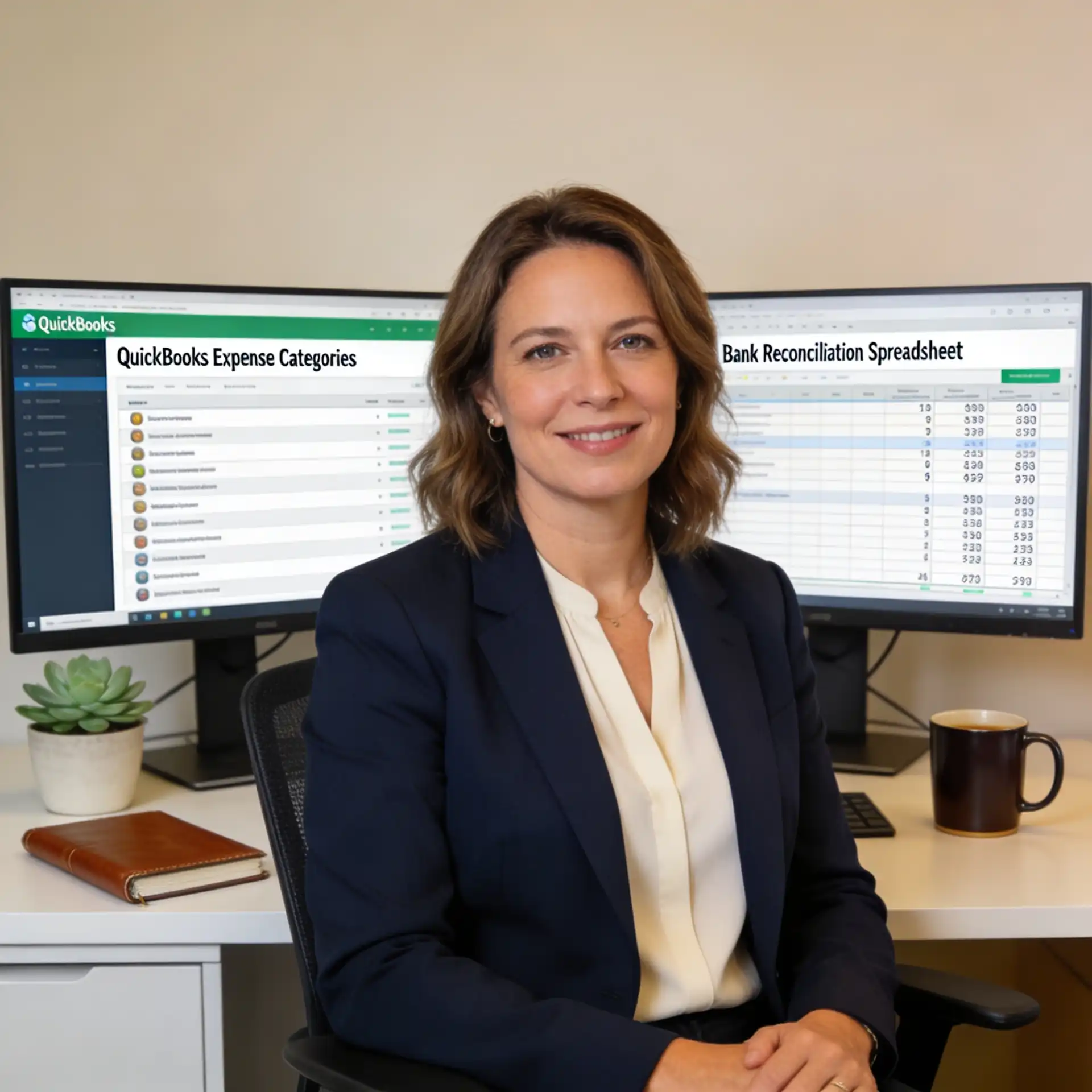
For a New Jersey small business, a bookkeeper typically handles:
- Transaction categorization in your accounting software
- Bank and credit card reconciliations
- Accounts payable, paying vendors, and tracking what you owe
- Accounts receivable, invoicing, and following up when clients are slow to pay
- Sales tax tracking (NJ’s rate is 6.625%, with regular filing requirements for retail, restaurant, and many service businesses)
- Monthly financial reports: P&L, balance sheet, cash flow
A good bookkeeper also keeps your records tax-ready throughout the year. When your accountant needs them, there’s no scramble, no cleanup bill, no delay.
What an accountant does that a bookkeeper does not
Accountants handle the higher-stakes, less frequent work:
- Federal and NJ state tax return preparation, including the Corporation Business Tax for NJ corporations and the Gross Income Tax for pass-through entity owners
- Tax planning and strategy, including projected liability, timing deductions, and structuring owner compensation
- Entity selection guidance, whether an LLC, S-Corp, or C-Corp, actually makes sense for your situation
- Audit representation with the IRS or NJ Division of Taxation
- Financial statement attestation for loans or investors
- Quarterly estimated tax planning (NJ requires these payments for many business owners)
How to figure out which one you need right now
Ask yourself a few honest questions:
Are transactions in your accounting software behind or inconsistently categorized? Are bank reconciliations getting skipped? Are personal and business expenses mixed together? Do you actually know what last month’s profit was? Are you spending more than a few hours a week just keeping up with financial admin?
If several of those are true, a bookkeeper fixes the operational problem. If you’re dealing with a tax notice, an audit, a major transaction, or a structural decision, that’s where an accountant earns their fee.
For most NJ businesses at the $250K+ revenue level, the honest answer is both.
Why Both Roles Work Best Together

It functions like a pipeline: the bookkeeper provides clean, organized data each month, and the accountant uses that data to file taxes, plan strategy, and advise on growth. When that system is working, you get lower accounting fees, faster filing, and real visibility into your numbers year-round.
A few things people get wrong here:
“I have QuickBooks, so I don’t need a bookkeeper.” QuickBooks is software; it records what you enter. Without someone regularly reviewing categorizations and reconciling accounts, the reports it generates may not reflect what’s actually happening.
“I’ll just have my accountant handle everything.” That works, but accountants bill at higher rates than bookkeepers. Separating the roles almost always costs less overall.
“My business is too small.” If you have a business bank account, run payroll, or file a business return, accurate books matter. Solo contractors and freelancers often benefit from bookkeeping precisely because they have less margin for error at tax time.
The bottom line
A bookkeeper handles the day-to-day, so an accountant can handle the strategy. For most New Jersey small businesses, it’s not really an either/or question. It’s about figuring out which combination you need, and when to start.
The businesses that get this right early tend to have one thing in common: they stopped treating bookkeeping as something to deal with later. Clean books aren’t just an accountant’s preference; they’re what lets you actually understand your business, make decisions with confidence, and stop dreading tax season. If your financials are a mess right now, that’s not unusual, but it does have a cost. Every month it goes unaddressed, the cleanup gets bigger, and the blind spots get harder to ignore.
The Chamberlain Accounting Firm specializes in bookkeeping, tax preparation, and strategic planning for small businesses, self-employed individuals, and law firms across Bergen County, NJ, and the U.S. Our services include full-service bookkeeping, year-round tax advisory, and business and individual tax returns (Forms 1040, 1065, 1120, and 1120S). Call us at (201) 371-3344 or schedule a consultation here.
Frequently Asked Questions
Generally, no. Bookkeepers maintain your financial records throughout the year, but tax preparation and filing are typically handled by an accountant, Enrolled Agent, or tax preparer with the proper credentials. What a good bookkeeper does is hand off clean, organized records, making the tax filing process faster and cheaper.
Start with a cleanup, sometimes called a "catch-up bookkeeping" project, where a bookkeeper goes back through prior months to reconcile and categorize everything properly. Once the backlog is cleared, you move to regular monthly bookkeeping. It's more common than you think, and most bookkeepers have done it before.
QuickBooks is a tool, not a professional. It records what gets entered, but it doesn't catch errors, flag miscategorized expenses, or tell you whether you're making money. You still need someone who knows what they're looking at. Most NJ small businesses that use QuickBooks benefit from having a bookkeeper manage it monthly, and an accountant review it at tax time.
Disclaimer: This article is provided for general informational purposes only and does not constitute accounting, tax, or financial advice. The information contained herein is not intended to be relied upon for specific tax, accounting, or financial decisions, and may not reflect current tax law or guidance. No opinion expressed herein may be used for the purpose of avoiding penalties under federal, state, or local tax laws. Readers should consult with a qualified accounting or tax professional regarding their specific circumstances. This communication does not create an accountant-client or advisory relationship.