
In this Article
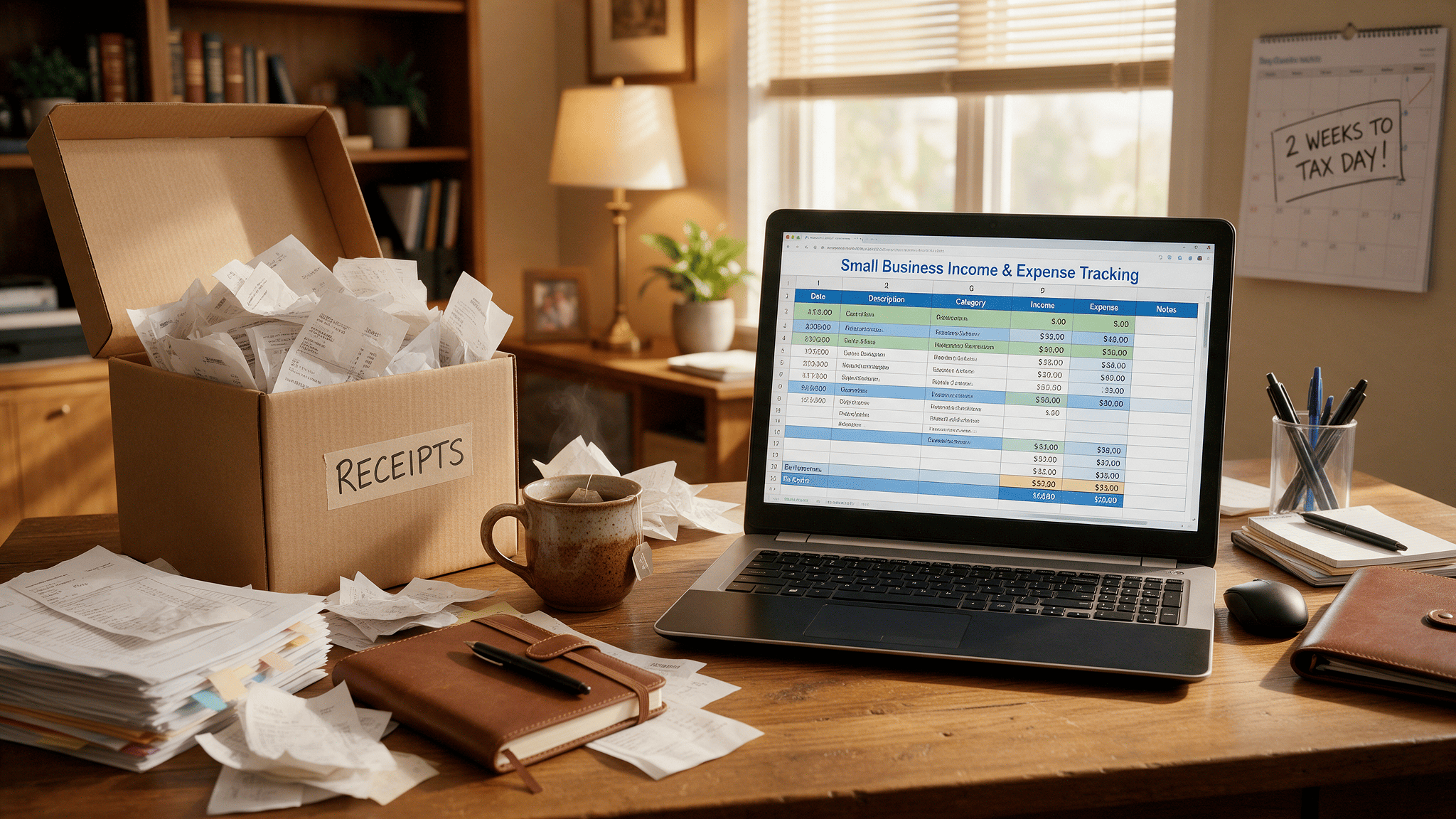
Every tax season, a familiar scene plays out in accounting firms. A client walks in with a shoebox of receipts, a QuickBooks file untouched since August, and a hopeful question: “Can you just do my taxes from this?”
The honest answer is that a tax return is only as good as the books behind it. If income is missing, expenses are miscategorized, or bank accounts haven’t been reconciled, those problems don’t disappear when they hit the tax software. They either get missed, creating risk, or they get caught, creating delays and extra fees.
Confirm Every Transaction Has Been Entered
Start by making sure the accounting system actually reflects everything that happened during the year. That means checking bank transactions, credit card activity, checks, electronic payments, cash transactions, customer receipts, vendor payments, transfers between accounts, loan activity, and any owner or shareholder transactions.
A common assumption is that a connected bank feed guarantees complete records. It does not. Bank feeds can duplicate entries, skip transactions entirely, miscategorize activity, or post something to the wrong period. The goal at this stage is simple: confirm the books mirror reality, not just what the software pulled in automatically.
💡 Pro Tip: Run a transaction count comparison between your accounting software and your bank statement for each month. A mismatch in transaction count is often the fastest way to catch a missing or duplicated entry.
Reconcile Every Bank Account
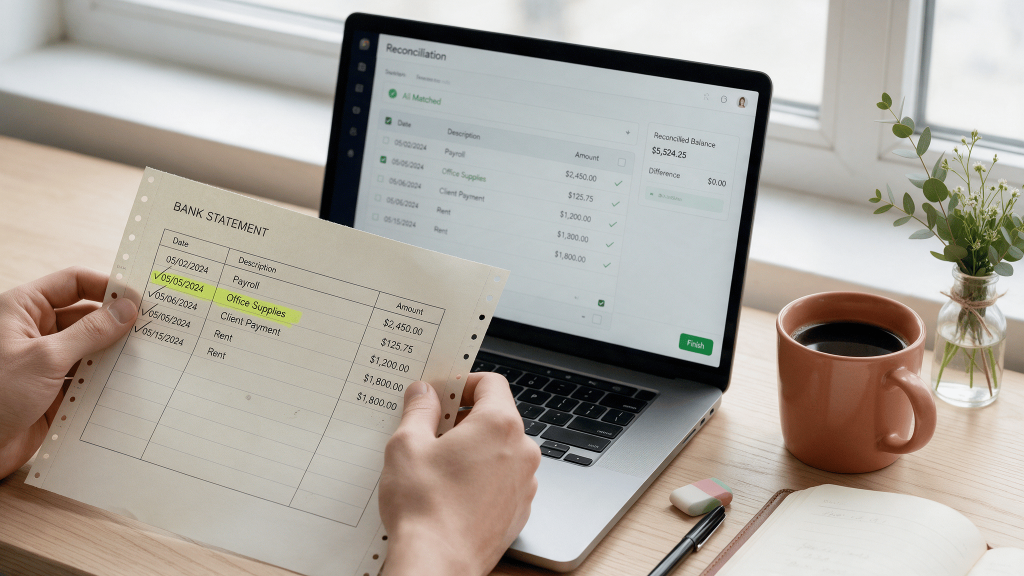
Complete bank reconciliation through the end of the tax year, account by account. Compare your books to the actual bank statements and investigate every difference, including outstanding checks, deposits in transit, duplicate entries, missing transactions, bank fees, interest income, and unrecorded deposits.
If your business has more than one bank account, each one needs its own reconciliation. Treating them together tends to hide errors rather than reveal them.
A fully reconciled bank account gives your tax preparer confidence that the cash activity reported in your books is real and complete, which matters more than almost any other single step in this process.
Reconcile Business Credit Cards
Credit cards deserve the same rigor as bank accounts. Confirm that every transaction is recorded, payments are posted correctly, personal charges are identified and separated, and the year-end balance matches the statement.
One mistake we see often is recording a credit card payment itself as an expense. The payment is generally just a reduction of the credit card liability. The individual purchases that built up the balance are what actually need to be classified as expenses. Getting this backward can significantly distort your expense totals.
Confirm Your Accounts Receivable Balance Is Accurate
If your business extends credit to customers, review the year-end accounts receivable balance closely. Confirm that all customer invoices are recorded, identify old outstanding invoices, note any balances collected after year-end, flag anything that looks uncollectible, and make sure customer deposits and credit memos are entered correctly.
The objective is to make sure the number sitting in accounts receivable actually reflects money you are still owed, not a stale or inflated figure.
Verify Outstanding Vendor Balances in Accounts Payable
Next, turn to accounts payable. Look for unpaid vendor invoices, duplicate bills, old balances that should have been resolved, payments made after year-end, and vendor credits.
Depending on your accounting method, not every dollar sitting in accounts payable is automatically deductible in the current year. This is one area where entity type and accounting method genuinely change the answer, so flag anything unusual for your preparer rather than assuming.
Reconcile Revenue Against Outside Sources
Revenue deserves a careful second look before filing. Compare what your books show to independent sources such as sales reports, payment processor statements, 1099 forms received, and bank deposits.
For example, if your books show $500,000 in revenue but your payment processor’s year-end report shows a materially different figure, you need to explain that gap before filing, not after. Differences like this are often timing issues, but you need to confirm them, not assume them.
Check That Expenses Are Classified Correctly
A thorough review does not stop at “did we record all our expenses?” It also asks whether those expenses landed in the right accounts. Walk through major categories including advertising, rent, utilities, insurance, professional fees, payroll, contract labor, travel, meals, vehicle expenses, and software subscriptions.
Pay particular attention to anything unusually large or out of pattern compared to prior periods. Misclassified expenses are one of the most common reasons a tax return needs to be amended later.
Separate Business and Personal Transactions
This step matters most for closely held businesses. Review any transactions involving owners, shareholders, partners, family members, or personal accounts that touched the business.
If an owner paid a business expense out of pocket, record it properly. If the business paid for something personal on an owner’s behalf, it should not automatically be logged as a deductible business expense. The correct treatment depends heavily on entity type, and the IRS applies real scrutiny, so flag questionable transactions for tax review rather than guessing.
Reconcile Payroll Records to Your Tax Filings
If you have employees, reconcile your books against your payroll reports. Check gross wages, federal and state withholding, Social Security and Medicare, employer payroll taxes, W-2 totals, retirement contributions, and officer compensation where applicable.
The payroll expense in your accounting records should match your payroll provider’s records and your filed payroll tax returns exactly. Resolve any gap before preparing the return, since payroll discrepancies often trigger follow-up notices.
Document Fixed-Asset Purchases Before Filing
Do not let your tax preparer discover major purchases for the first time when the return is already underway. Build a list of significant purchases made during the year, including equipment, machinery, vehicles, computers, furniture, and leasehold improvements, along with purchase date, cost, and supporting documentation for each.
Your preparer will determine the appropriate depreciation treatment, but they can only do that efficiently if the information is organized in advance. Not every large purchase belongs on the current year’s expense line; some capital purchases are recovered over several years instead.
Reconcile Loans and Other Liabilities
Compare your books against year-end statements for every business loan and financing arrangement. Separate principal from interest, and current liabilities from long-term ones. Identify any new loans, repayments, refinancing, or related-party and shareholder loans that occurred during the year.
If a loan balance in your books doesn’t match the lender’s statement, that discrepancy should be resolved before the books are considered final.
Confirm Year-End Inventory Counts Are Accurate
If your business carries inventory, this section deserves special attention. Review physical inventory counts, purchases, sales, cost of goods sold, and any damaged or obsolete stock that needs to be written down.
For inventory-heavy businesses, this single step can materially change reported income, so it is worth doing carefully rather than estimating.
Classify Owner and Shareholder Transactions Correctly
Closely held businesses frequently have money moving between the business and its owners. Review owner draws, contributions, shareholder distributions, shareholder loans, and partner capital accounts. Don’t treat these transactions as ordinary business expenses just because cash left the business. The correct tax treatment depends on your entity structure, and getting this wrong is one of the more common reasons a return gets revised after the fact.
Audit the Full Balance Sheet
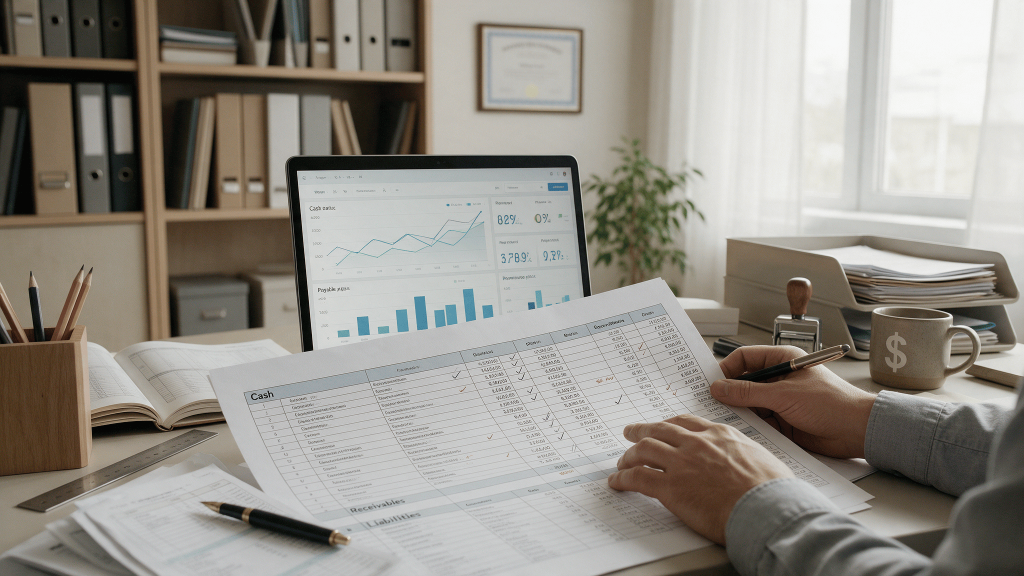
After reviewing the major accounts individually, look at the balance sheet as a whole.
| Balance Sheet Account | What to Check |
| Cash | Reconciled to bank statements |
| Accounts Receivable | Outstanding balances reviewed |
| Inventory | Year-end balance supported |
| Fixed Assets | Additions and depreciation reviewed |
| Accounts Payable | Vendor balances reviewed |
| Credit Cards | Statements reconciled |
| Loans | Lender balances reconciled |
| Payroll Liabilities | Payroll records agree |
| Owner and Shareholder Accounts | Transactions properly classified |
| Equity | Contributions, distributions, and retained earnings reviewed |
A balance sheet review often surfaces issues that never show up on the income statement alone.
Read the P&L Statement Line by Line
Review the final Profit and Loss statement from top to bottom. Does revenue look reasonable? Are expenses complete? Are there unusual swings, unexplained negative balances, or personal transactions that slipped in?
Comparing the current year to the prior year is especially useful here. If office expenses jumped from $10,000 to $75,000, that increase might be legitimate, but you should understand and document it before filing, not have a preparer discover it later.
Compare This Year’s Numbers to Last Year’s
Line up revenue, gross profit, major expenses, payroll, depreciation, interest, assets, liabilities, and equity against the prior year. Investigate significant changes rather than assuming they’re errors or fine.
This comparison is often the fastest way to catch a missing transaction, a classification error, or a genuine business change that needs an explanation.
Identify Where Book Income Differs From Taxable Income
Your accounting income and your taxable income are not the same thing. Depending on your situation, adjustments may involve depreciation timing, meals limitations, nondeductible expenses, charitable contributions, interest limitations, and accrued expenses, among others.
This is why finalizing your books is not the same as simply copying the Profit and Loss statement into tax software. The IRS and AICPA both publish guidance on common book-to-tax adjustments, and your preparer should walk through these explicitly rather than applying a blanket assumption.
Gather All Tax Documents
Once your books are substantially finalized, pull together everything your preparer will need: 1099s, W-2s, payroll reports, loan statements, fixed-asset invoices, depreciation schedules, state tax documents, and your prior-year return.
Build a checklist of what is still missing now, rather than discovering gaps when the return is nearly done.
Cross-Check the Tax Return Against Final Books
After the return is drafted, do one final comparison. Confirm that revenue matches your finalized books, major expenses are reflected correctly, depreciation ties to your fixed-asset schedule, payroll figures agree with payroll records, and prior-year carryforwards have been accounted for.
This final check is the bridge between your accounting records and what actually gets filed, and it is worth the extra hour it takes.
A Practical Year-End Checklist
Accounting Records
- All bank and credit card transactions recorded
- Bank accounts and credit cards reconciled
- Accounts receivable and payable reviewed
Income and Expenses
- Revenue reconciled against outside sources
- Major expenses reviewed and correctly classified
- Personal transactions removed or properly classified
Payroll and Assets
- Payroll reconciled to filings
- Fixed assets and depreciation documented
- Loans reconciled, inventory reviewed if applicable
Balance Sheet
- Cash, receivables, payables, loans, and equity all reconciled
- Owner and shareholder accounts properly classified
Tax Preparation
- Prior-year return reviewed
- Book-to-tax differences identified
- Tax documents gathered and missing-item list completed
- Final books compared against the completed return
Conclusion
Finalizing your accounts before tax season is not just about closing the books. It is about being able to answer three questions with confidence: Is all business activity recorded? Do the records reconcile to the underlying documents? And are there any transactions that genuinely need tax review before filing?
Working through this checklist before you sit down with a preparer, or before you open tax software yourself, tends to save far more time than it costs. It also reduces the odds of last-minute surprises and amended returns down the road.
At The Chamberlain Law Firm, we help small businesses with bookkeeping, reconciliation, and tax preparation year-round, so filing season is never a scramble. If you would rather hand off the year-end review entirely, our team can take it from here. Contact us or call us at (201) 371-3344
Frequently Asked Questions
No. Bank feeds can duplicate entries, skip transactions, miscategorize activity, or post items to the wrong period, so books still need to be manually reconciled against actual bank and credit card statements.
Recording the credit card payment itself as an expense, rather than the individual purchases that built up the balance. The payment is really just a reduction of the credit card liability, and treating it as an expense can distort your totals.
Accounting income and taxable income aren't the same. Differences often come from depreciation timing, meals limitations, nondeductible expenses, and other adjustments, so finalized books still need a book-to-tax review before filing, not a direct copy into tax software.
Disclaimer: This article provides general federal tax information and is not intended as individualized tax advice. State tax rules may differ. Please consult your tax professional regarding your specific situation.